October in Jack Kerouac’s St. Petersburg
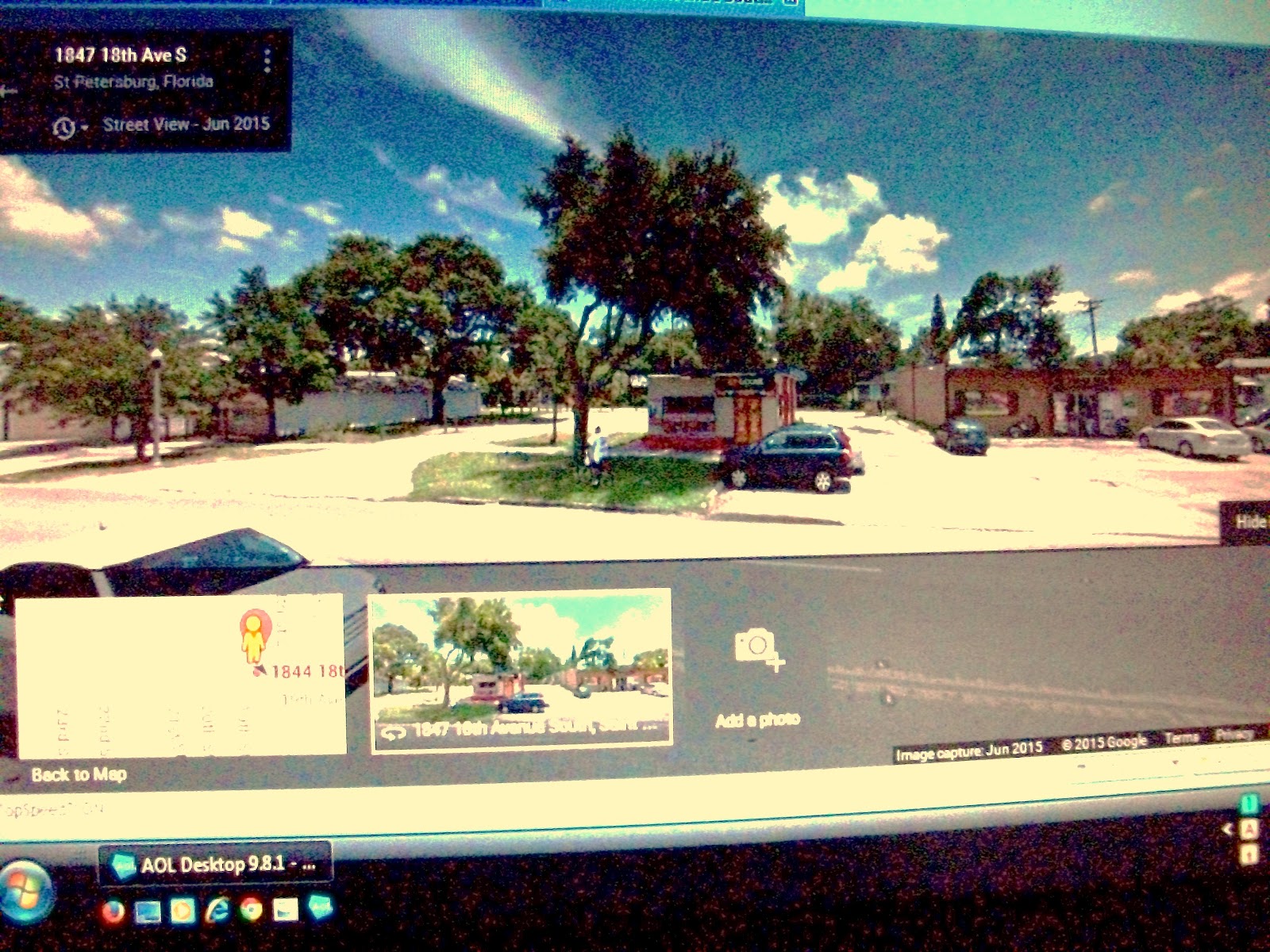
This is the site of the former Cactus Bar on 1844 18th Ave South St. Petersburg, FL 33712 where Jack Kerouac was severely beaten. He was discovered crawling along the road, taken to jail to sober up, and released on $25 bail. Two weeks later, he died from massive internal hemorrhaging brought about by the beating and years of heavy drinking. There is a Boost Mobile kiosk and a convenience store there now.
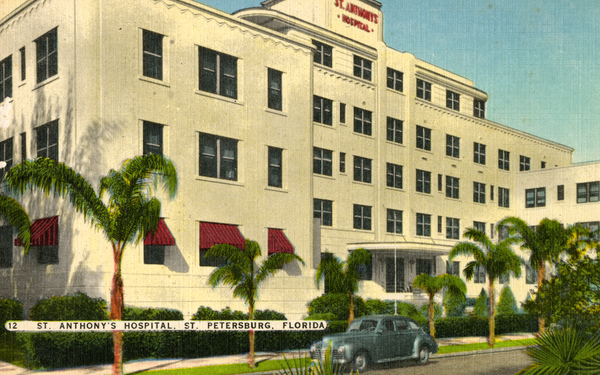
He died at St. Anthony’s Hospital on October 21, 1969.
I was born on October 21, 1973.
I suppose I first heard about Jack Kerouac this way…
Then I began to notice his books on the bookshelves. You know, the ones that have the ubiquitous Penguin orange spines?
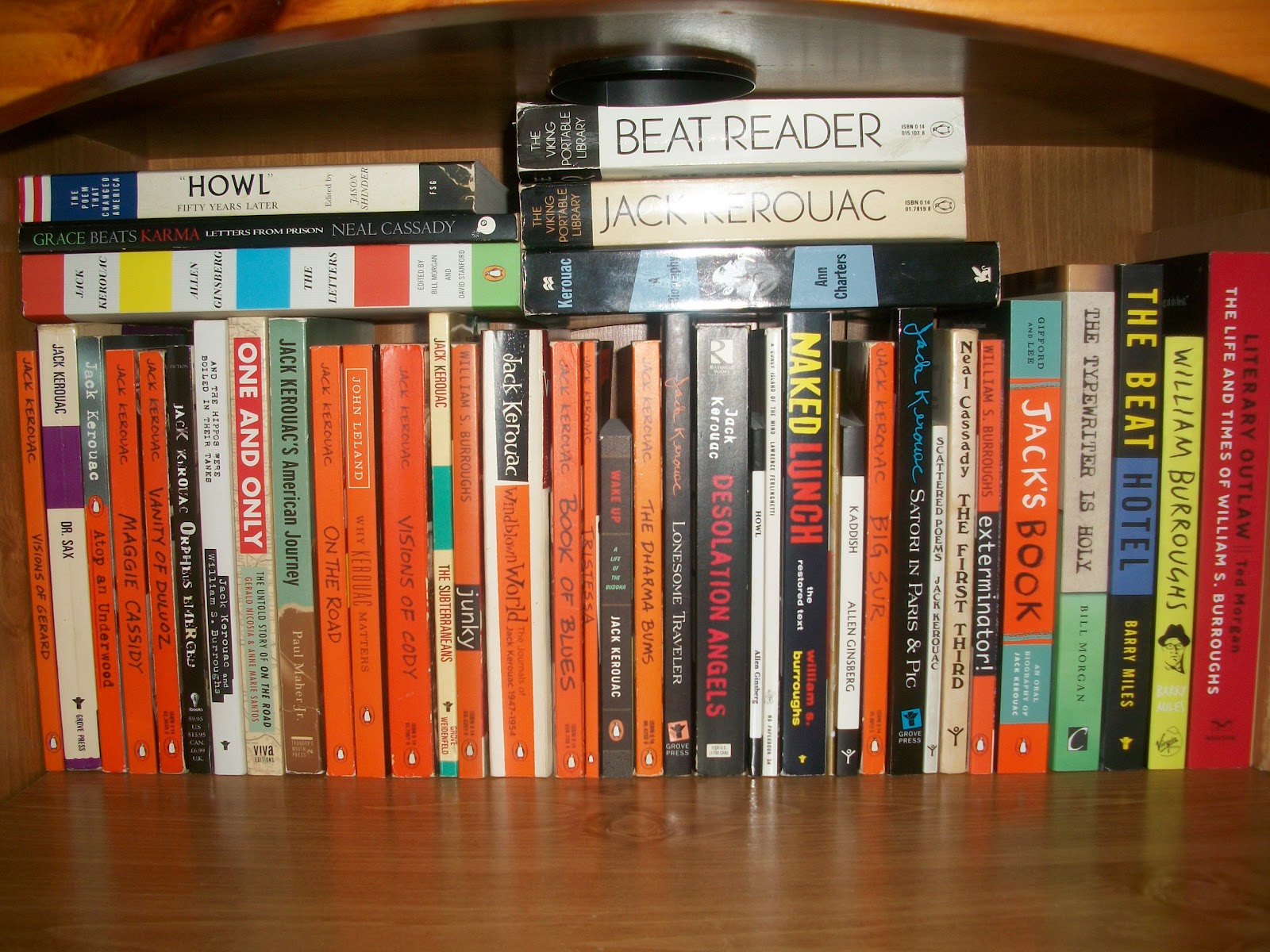
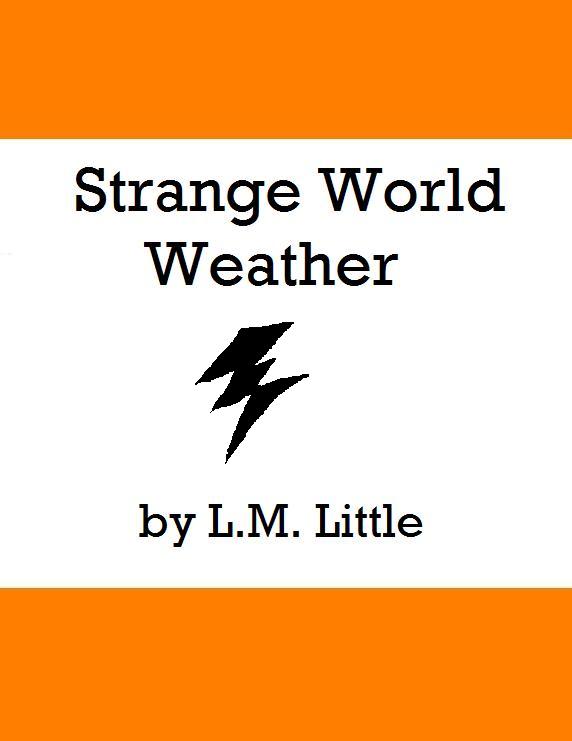
Seeing them along the shelves, with their neat uniformity spoke to my desire to find order in a chaotic universe. Besides, being a child of the 70’s, orange was my favorite color. I even designed the cover of my poetry book as an homage to how much I love those Penguin books.
I suppose that is something we have to discuss. The pull of Jack Kerouac goes beyond just his literary achievements. There is a fashionably hip sense of cool in dropping the name Kerouac.

The Gap used his image to sell pants that have now become the standard uniform of retail wage slaves everywhere. Before that, Khakis were cool, because Jack wore them.

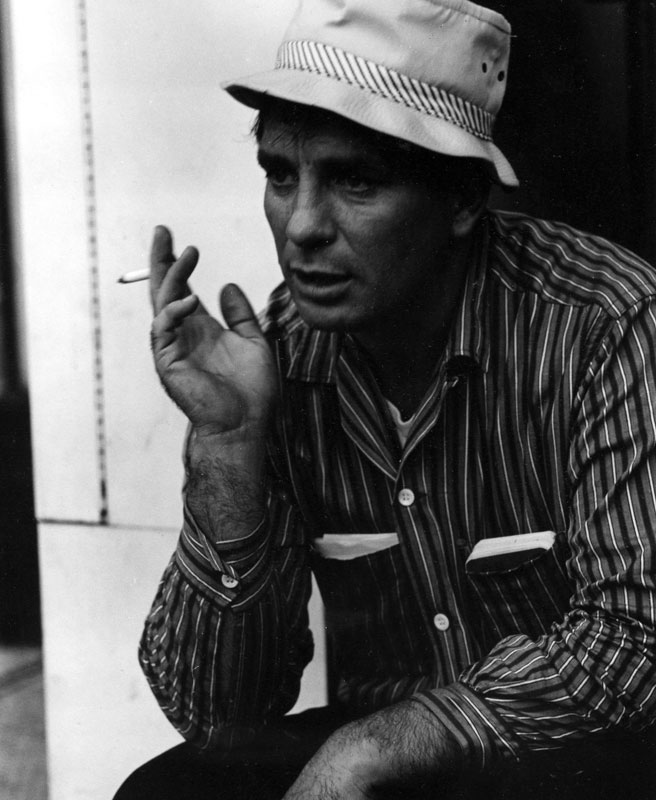
He was a handsome fella, there is no doubt about it. He was cool without looking like he was trying to be. With his dark and stormy good looks, he was referred to as the “James Dean” of the typewriter. Perhaps that is part of his appeal, a sort of aspirational wish fulfillment for all the terminally unhip writers out there, thinking they might catch a bit of his je ne sais quoi by association... or osmosis…
It is an illusion though, the cool confidence that exudes from his photographs. He was painfully and awkwardly introverted. Not the Dean Moriarty character, but the Sal Paradise, hero of his own inner landscape. Always on the outside, observing. Readers made that mistake for decades, reading his character study of Neal Cassady as a biography of himself. His desire to not let them down probably contributed to his decline as much as anything. He overindulged in substances as a means of escaping his shell and became a caricature of the person that people expected him to be. It was a costume. A mask. A personae similar to the one that most of us have to don in order to get through our workday. At the end of the day you have to disrobe and stare at yourself in the mirror, wondering who is the genuine person and who is the sideshow. If you do this too often, the blurred lines between the mask and reality become harder and harder to partition.
For my initial foray into “On The Road” I was obsessed with trying to figure out who were the real life counterparts to the characters. By doing so, I missed passages of such spiritual beauty and enlightenment.
I, too, did Jack a disservice.
When I read the “Original Scroll” edition I was able to do so less distracted, because the actual names had been restored. I have mixed feelings about this.
Consider this quote from the man himself:
My work comprises one vast book like Proust's except that my remembrances are written on the run instead of afterwards in a sick bed. Because of the objections of my early publishers I was not allowed to use the same personae names in each work. On the Road, The Subterraneans, The Dharma Bums, Doctor Sax, Maggie Cassidy, Tristessa, Desolation Angels, Visions of Cody and the others including this book Big Sur are just chapters in the whole work which I call The Duluoz Legend. In my old age I intend to collect all my work and re-insert my pantheon of uniform names, leave the long shelf full of books there, and die happy. The whole thing forms one enormous comedy, seen through the eyes of poor Ti Jean (me), otherwise known as Jack Duluoz, the world of raging action and folly and also gentle sweetness seen through the keyhole of his eye.
Jack Kerouac
Kerouac wanted uniformity of names throughout, but his publishers objected. Whether or not he wanted to use real names or their character equivalents is left to interpretation.
The last line of On The Road is: “...I think of Dean Moriarty.”
The last line of The Original Scroll version is “...I think of Neal Cassady.”
Moriarty has 4 syllables whereas Cassady has 3. Subtle difference to anyone who hasn’t written song lyrics or poetry, but 1 syllable in those forms can make worlds of difference. Listen to how convincing the line is when delivered by Jack on the Steve Allen Show in 1959.
The two had worked together previously in 1957. As an aside, Kerouac is reading from Visions of Cody as well as On the Road.
This coming year (2016) I plan to read Jack Kerouac’s The Duluoz Legend which consists of the following books. I plan on skipping The Town and The City in favor of The Sea Is My Brother. I will also be adding Lonesome Traveler and Book of Dreams.
BOOK TITLE
|
TIME COVERED
|
WRITTEN
|
PUBLISHED
|
Atop an Underwood
|
Various
|
1936–1943
|
1999
|
Visions of Gerard
|
1922–1926
|
1956
|
1963
|
Doctor Sax
|
1930–1936
|
1952
|
1959
|
The Town and the City
|
1935–1946
|
1946–1949
|
1950
|
Maggie Cassidy
|
1938–1939
|
1953
|
1959
|
Vanity of Duluoz
|
1935–1946
|
1968
|
1968
|
On The Road
|
1946–1950
|
1948–1956
|
1957
|
Visions of Cody
|
1946–1952
|
1951–1952
|
1959 & 1973
|
The Subterraneans
|
1953
|
1953
|
1958
|
Tristessa
|
1955–1956
|
1955–1956
|
1960
|
The Dharma Bums
|
1955–1956
|
1957
|
1958
|
Desolation Angels
|
1956–1961
|
1956–1957
|
1965
|
Big Sur
|
1960
|
1961
|
1962
|
Satori in Paris
|
1965
|
1965
|
1966
|
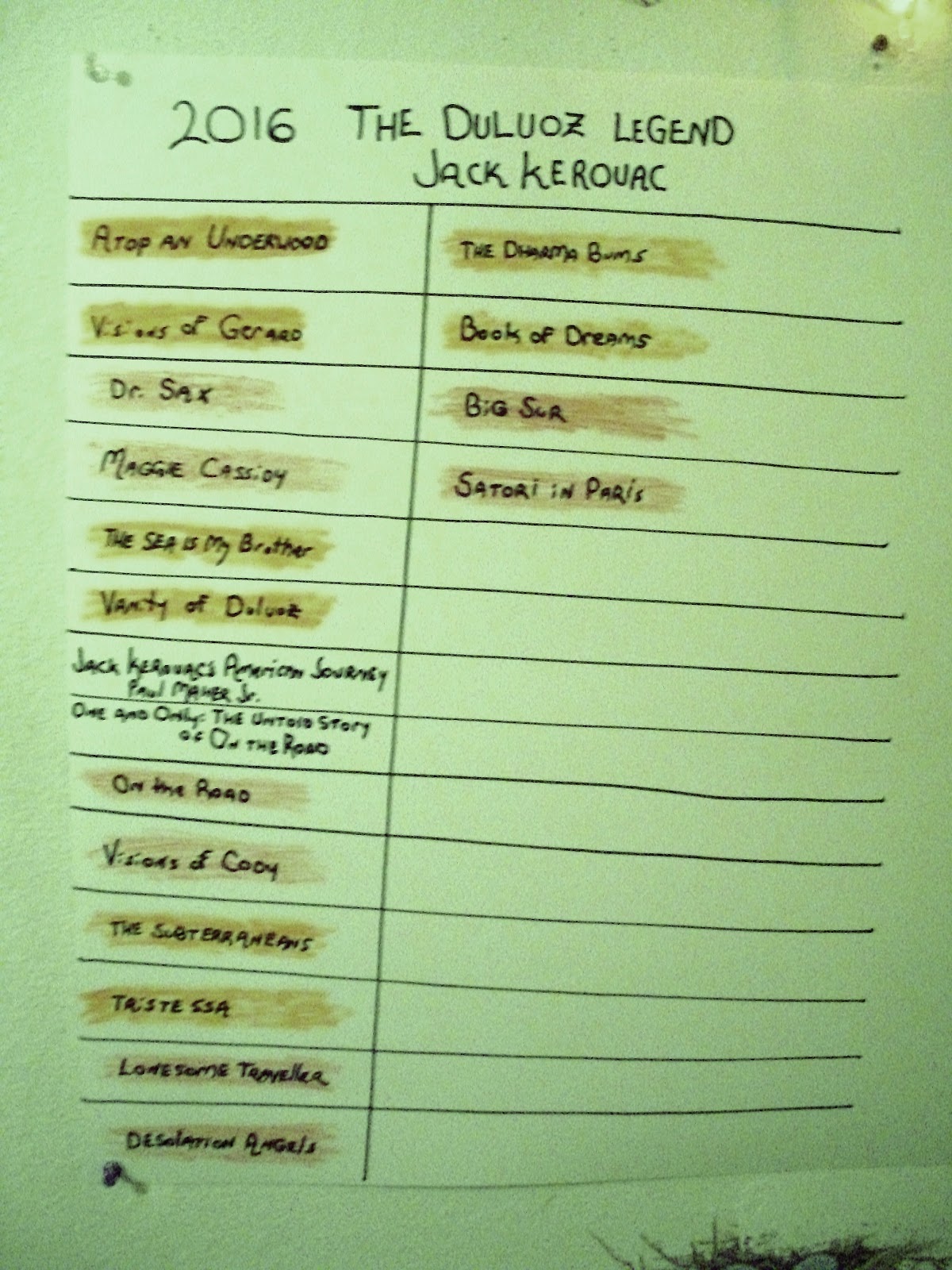
Going to fill in the dates as I finish each one.

My Jack Kerouac reference books.

18 books in 1 year shouldn’t be a problem.
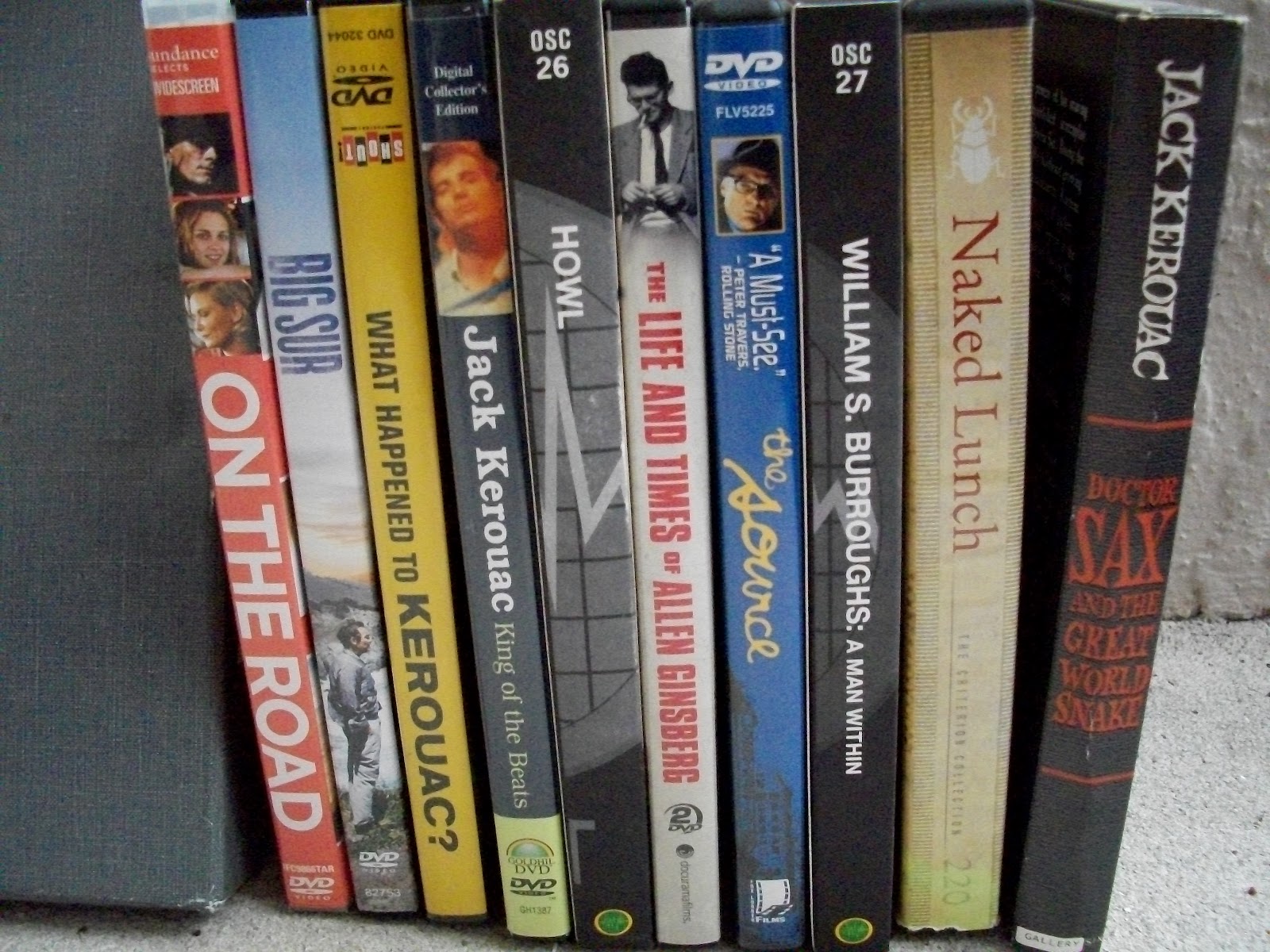
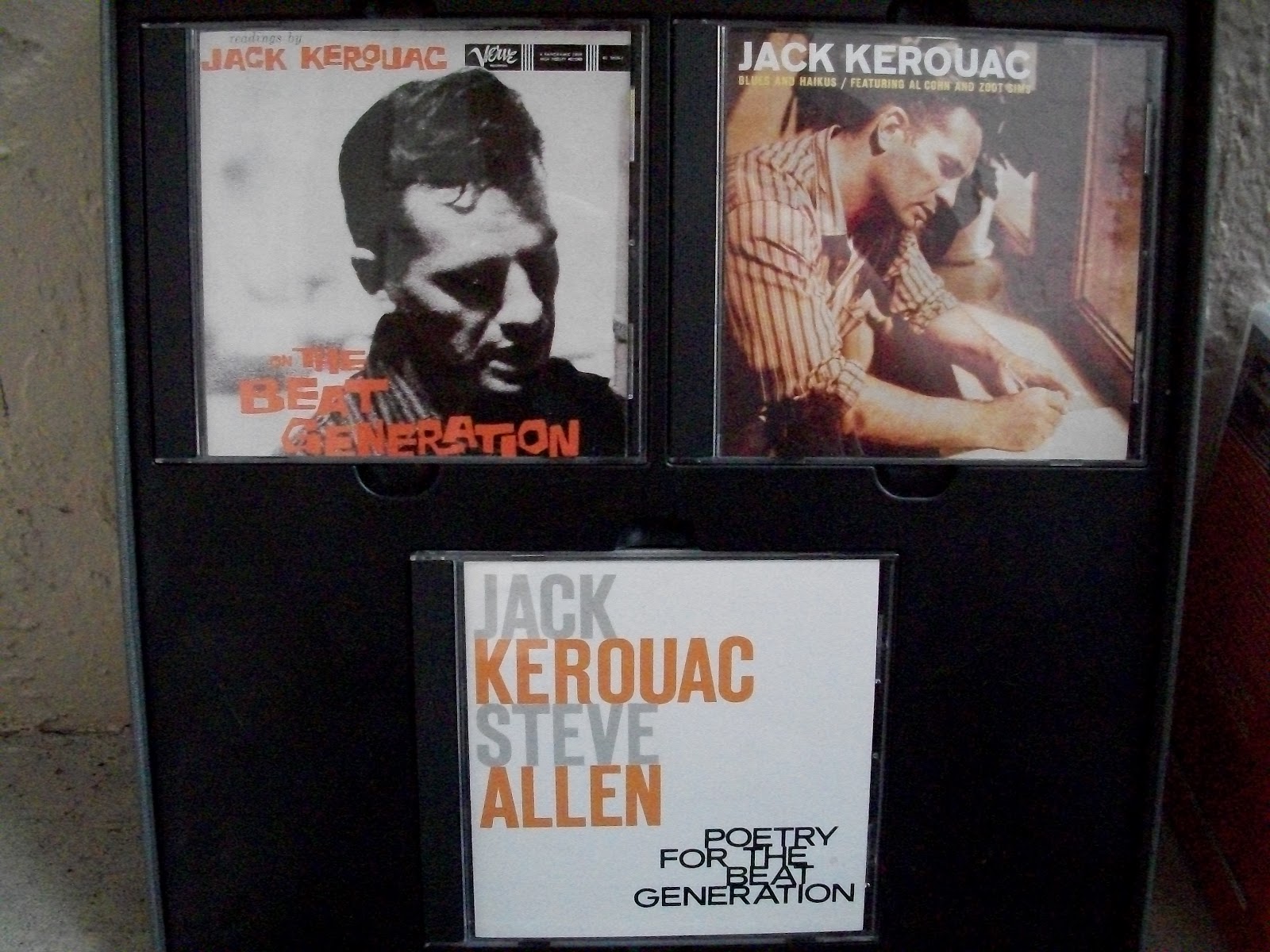
Jack Kerouac A/V materials.

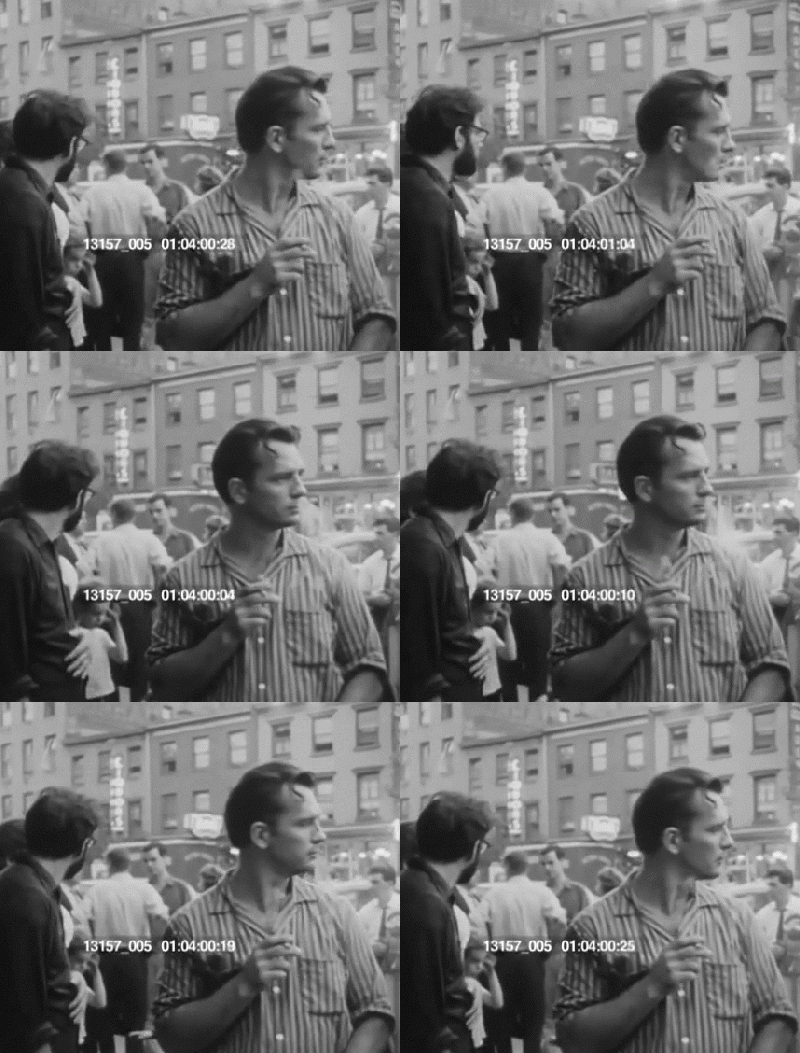
Jack Kerouac Timeline
1922:
|
Born Jean Louis Lebris de Kerouac in Lowell, MA on March 12; third child of Gabrielle and Leo Kerouac, French-Canadian immigrants to New England.
|
1939:
|
Graduates from Lowell High School.
|
1939-
1940:
|
Attends Horace Mann Preparatory School, New York City.
|
1940-
1941:
|
Attends Columbia College, NY.
|
1942:
|
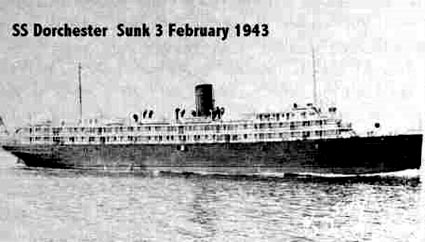
Sails to Greenland as merchant marine on S.S. Dorchester.
 |
1943:
|
Enlists in U.S. Navy, discharged on psychiatric grounds. Sails to Liverpool as merchant seaman on S.S. George Weems.
 |
1944:
|
Meets Lucien Carr who introduces him to Allen Ginsberg and William S. Burroughs. Jailed as accessory and material witness in David Kammerer murder case (killed by Lucien Carr). Marries Edie Parker so that her family will pay his bail.
 |
1945:
|
Begins writing The Town and the City. Meets Neal Cassady in New York.
 |
1946:
|
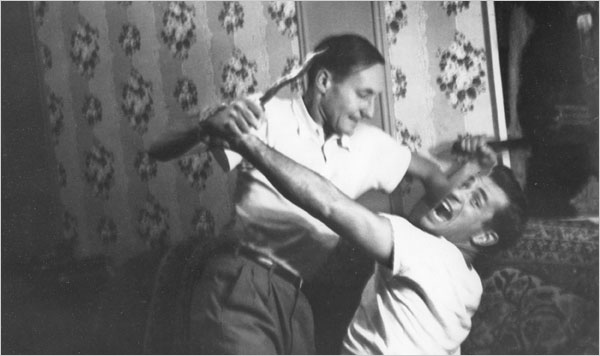
Marriage with Edie Parker annulled. Collaborates with William Burroughs on an unpublished novel, And the Hippos Were Boiled in Their Tanks, an account of the events surrounding the Kammerer murder.
 |
1947:
|
Travels to Denver, California, and back to New York.
|
1948:
|
Meets John Clellon Holmes and invents the term beat generation.
|
1948:
|
Begins working on earliest version of On the Road.
|
1949:
|
Travels with Cassady to Louisiana and San Francisco. Moves briefly to Colorado with mother (Memere). Visits San Francisco. Returns with Cassady to New York.
|
1950:
|
The Town and The City published. Travels to Denver, then with Cassady to Mexico. Marries Joan Haverty in New York.
|
1951:
|
Reads manuscripts of Burroughs' Junkie and Holmes' Go in February/March. Writes On The Road, the third version, on a single roll of paper in three weeks during April and May. Separates from Joan Haverty. Discovers compositional method of "sketching" or "spontaneous prose" and begins to rewrite On The Road as the experimental book Visions of Cody; continues work into 1952 at Neal Cassady's home in San Francisco. Hospitalized with thrombophlebitis as a result of heavy Benzedrine use. Travels to California.
|
1952:
|
Writes Dr. Sax in Burroughs' apartment in Mexico City. Travels to North Carolina to visit sister Caroline in Rocky Mount, back to California where he works as a student brakeman and writes "The Railroad Earth" in California and Mexico before returning to New York. Daughter Jan Kerouac born in Albany, New York.
|
1953:
|
Writes Maggie Cassidy while in New York. Travels to California; works on railroad; takes job on S.S. William Carruth; leaves Carruth in New Orleans. Writes The Subterraneans in New York.
|
1954:
|
Visits Cassady in San Jose. Studies Buddhism in New York and California. Writes "San Francisco Blues" in San Francisco Some of the Dharma in New York and North Carolina.
|
1955:
|
Travels to Mexico City where he writes Mexico City Blues and begins Tristessa. Meets Gary Snyder and attends "Six Poets at the Six Gallery" reading in San Francisco on Oct. 13 where Ginsberg first reads "Howl."
|
1956:
|
Writes Visions of Gerard in North Carolina. Travels to California; stays in Marin County. Writes The Scripture of the Golden Eternity and "Old Angel Midnight." Works as fire lookout in Mr. Baker National Forest, Washington, where he writes the journals that would become Book One of Desolation Angels. Finishes Tristessa in Mexico City where he prepares Book One of Desolation Angels. Returns to New York. Ginsberg's Howl and Other Poems published by City Lights in San Francisco.
|
1957:
|
Travels to Tangier, Morocco where he types and edits Burroughs' Naked Lunch with Ginsberg, then on to Paris and London. After returning to New York where he meets and lives with Joyce Johnson; moves to Berkeley with his mother. Visits Mexico City briefly; moves to Orlando, FL. with mother. Travels to New York. During this time On the Road is published and Kerouac gives readings at the Village Vanguard. Writes The Dharma Bums in Orlando.
|
1958:
|
Buys home in Northport, Long Island. The Subterraneans and The Dharma Bums are published. Neal Cassady sentenced to five years in San Quentin for possession of marijuana. Begins writing sketches for Lonesome Traveler.
|
1959:
|
Narrates film Pull My Daisy in New York which is based on his play, The Beat Generation. Begins writing column for Escapade. Dr. Sax, Mexico City Blues, and Maggie Cassidy published. Travels to Los Angeles for Steve Allen Show appearance.
|
1960:
|
Travels to California, stays at Bixby Canyon (Big Sur); suffers alcohol withdrawal and nervous breakdown. Returns to New York. Tristessa and Lonesome Traveler published.
|
1961:
|
Book of Dreams published. Moves to Orlando with mother. Travels to Mexico City, where he writes Book Two ("Passing Through") of Desolation Angels. Returns to Florida, where he writes Big Sur.
|
1962:
|
Moves back to Northport with mother. Big Sur published.
|
1963:
|
Visions of Gerard published.
|
1964:
|
Moves with mother to St. Petersburg, Florida. Sister Caroline dies. Meets Ken Kesey in New York with the Merry Pranksters. Neal Cassady is the driver. It is the first time they have seen each other in years.
|
1965:
|
Travels to France. Writes Satori In Paris and Pic in Florida. Desolation Angels published.
|
1966:
|
Satori In Paris published. Moves to Hyannis, MA, with mother who suffer a stroke. Marries Stella Sampas, sister of childhood friend Sebastian Sampas.
|
1967:
|
Moves to Lowell with mother and wife. Writes Vanity of Duluoz.
|
1968:
|
Neal Cassady dies in Mexico. Vanity of Duluoz published. Travels to Europe with friends. Appears on Firing Line hosted by William F. Buckley. Moves with mother and wife to St. Petersburg.
|
1969:
|
Dies in St. Petersburg, Oct. 21, of abdominal hemorrhage due to complications associated with alcohol abuse.
|
There is an abundance of literary destinations associated with Jack Kerouac.

Jack Kerouac's birthplace at 9 Lupine Road, 2nd floor, in the West Centralville section of Lowell, Massachusetts. He was born on March 12, 1922.
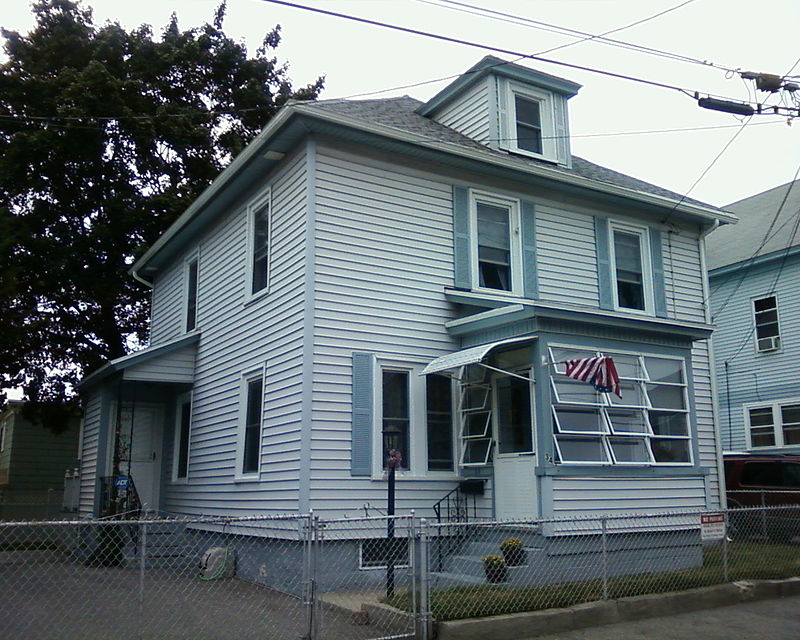
His third home in the West Centralville section of Lowell.
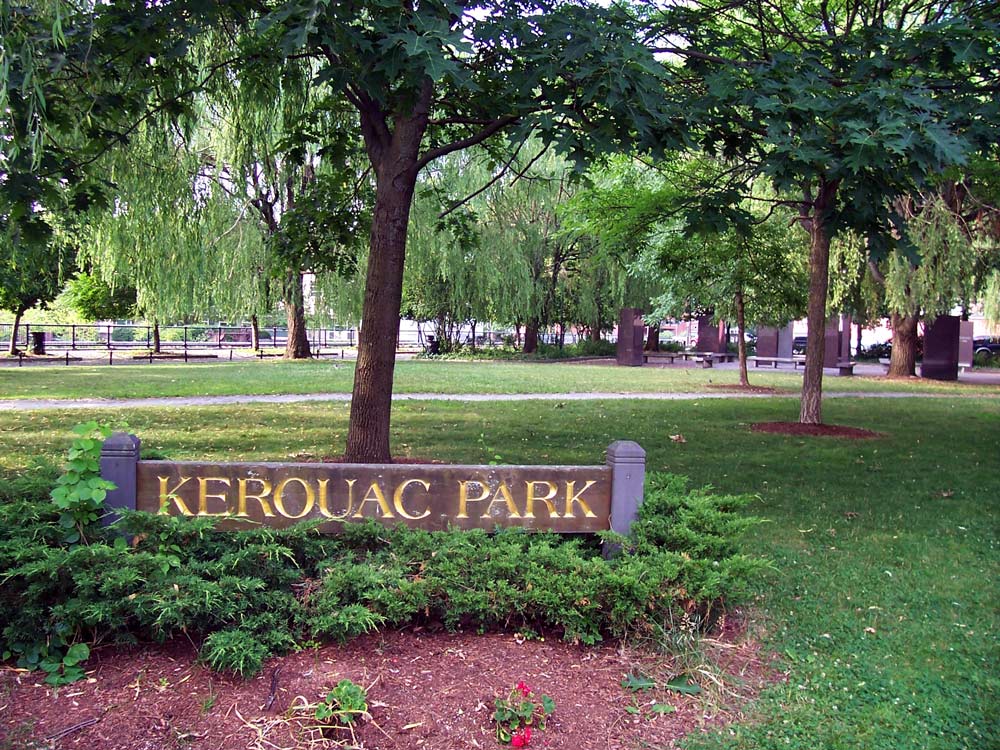
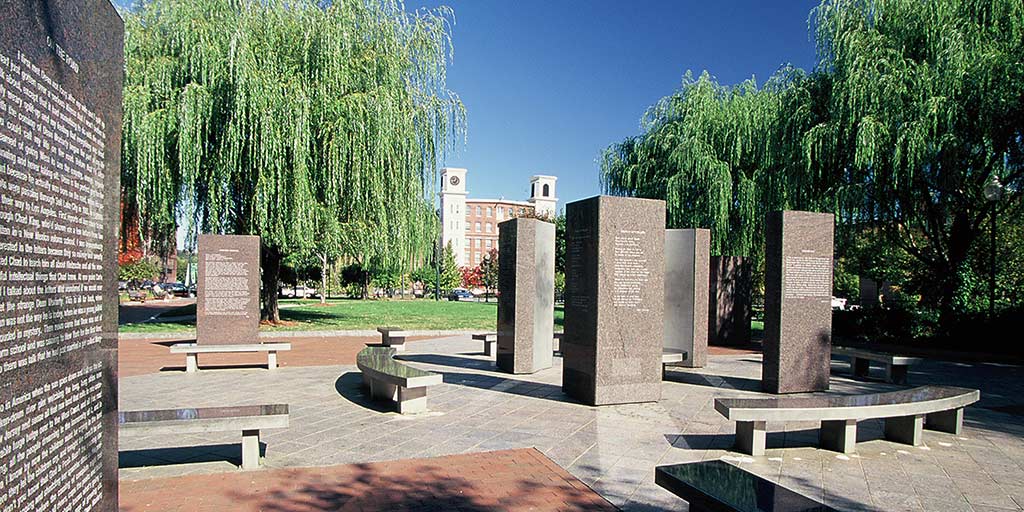
Kerouac Park located at 75 Bridge St Lowell, MA 01852.
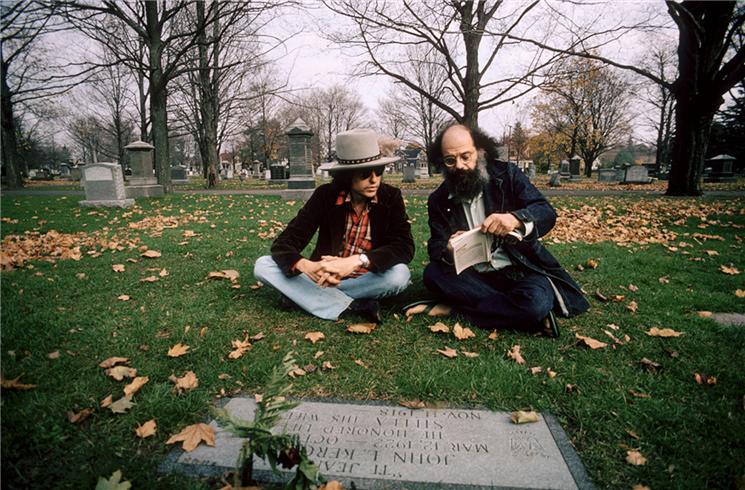
Bob Dylan and Allen Ginsberg at Jack Kerouac’s grave in Edson Cemetery located at 1375 Gorham Street in Lowell, Massachusetts - Lot 76, Range 96, Grave 1.

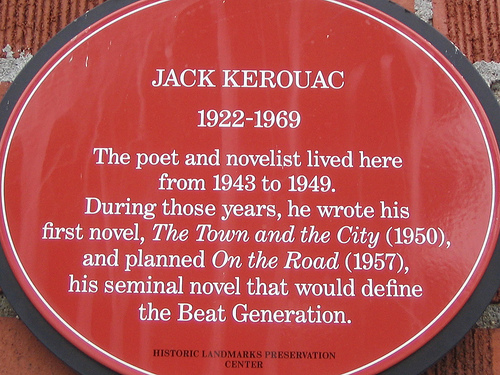
133-01 Cross Bay Blvd, Queens, NY 11417
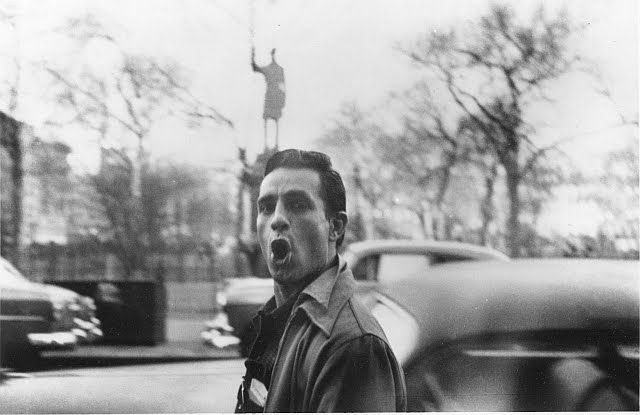
Jack Kerouac in Tompkins Square Park Manhattan in the Fall of 1953.
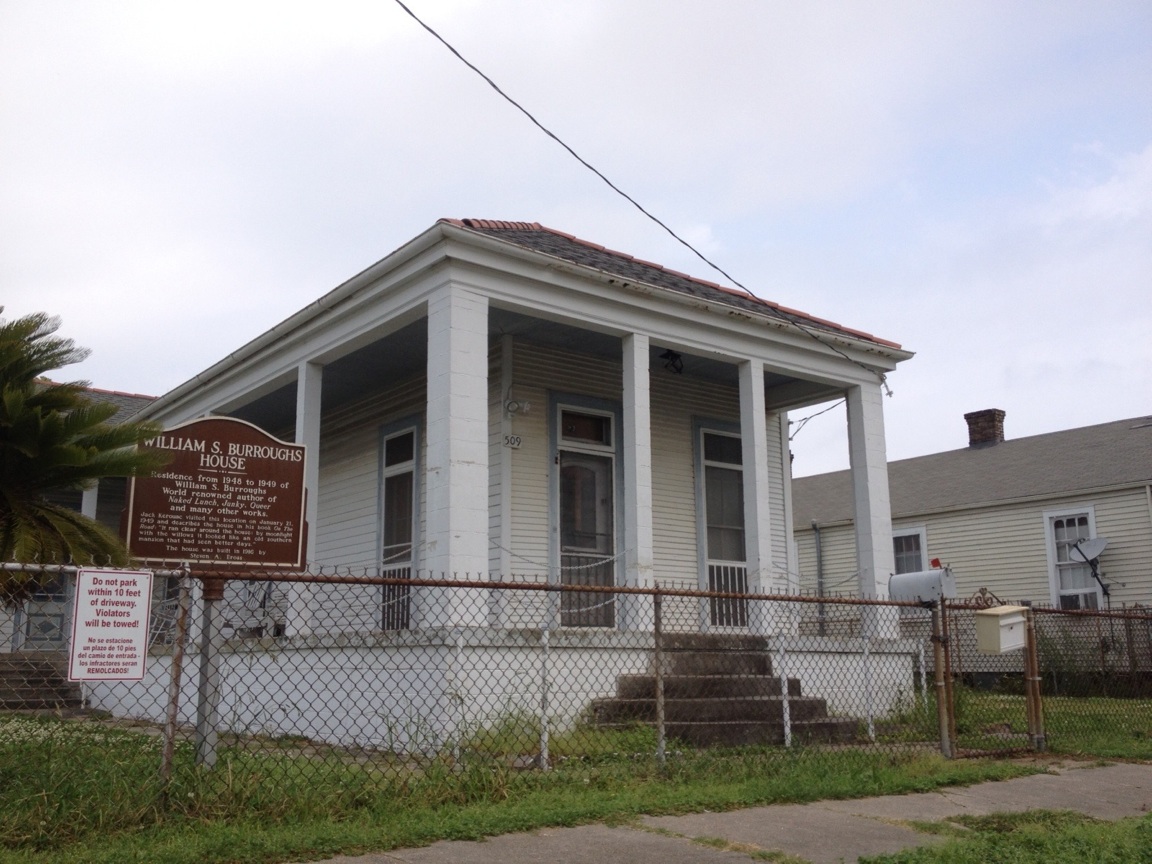
The William S. Burroughs House at 509 Wagner St, New Orleans, LA 70114.
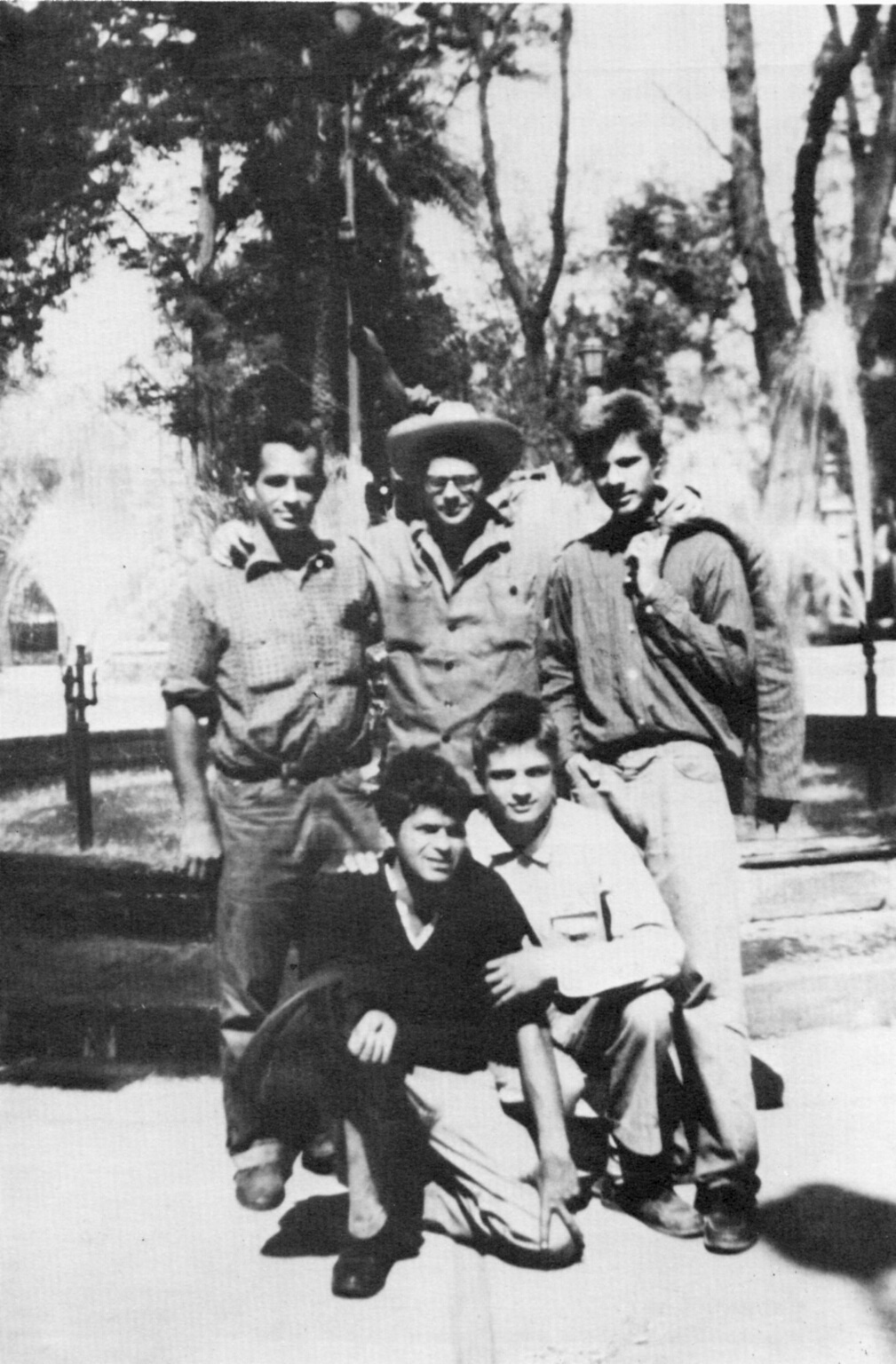
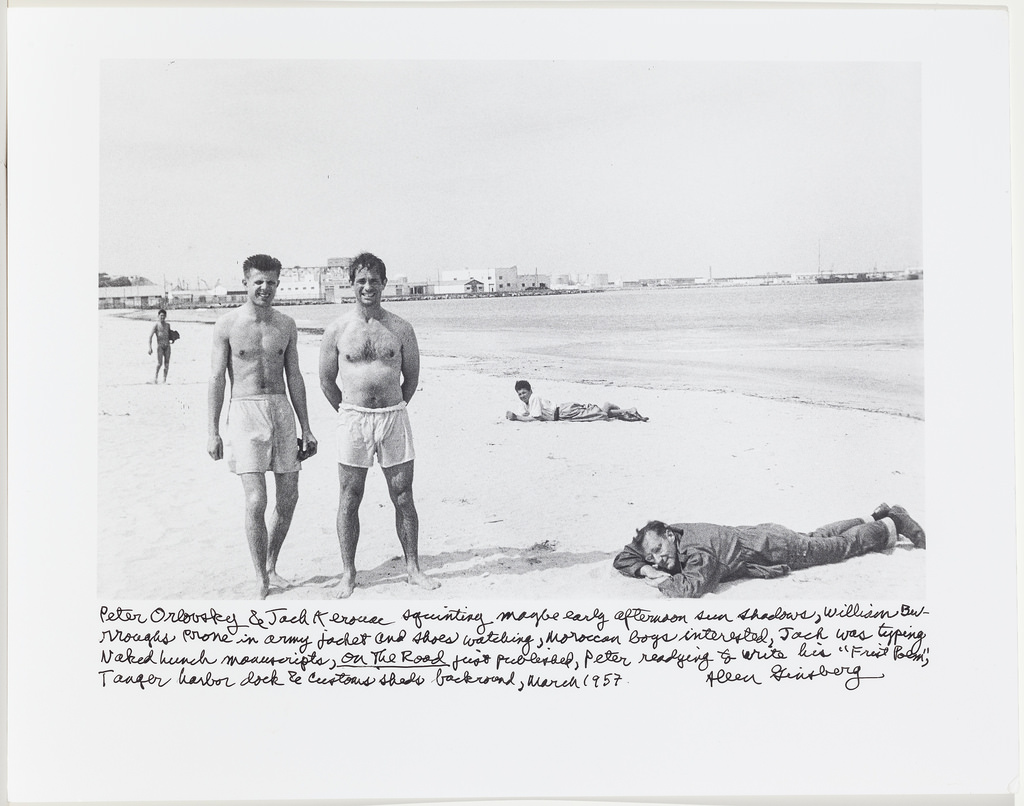
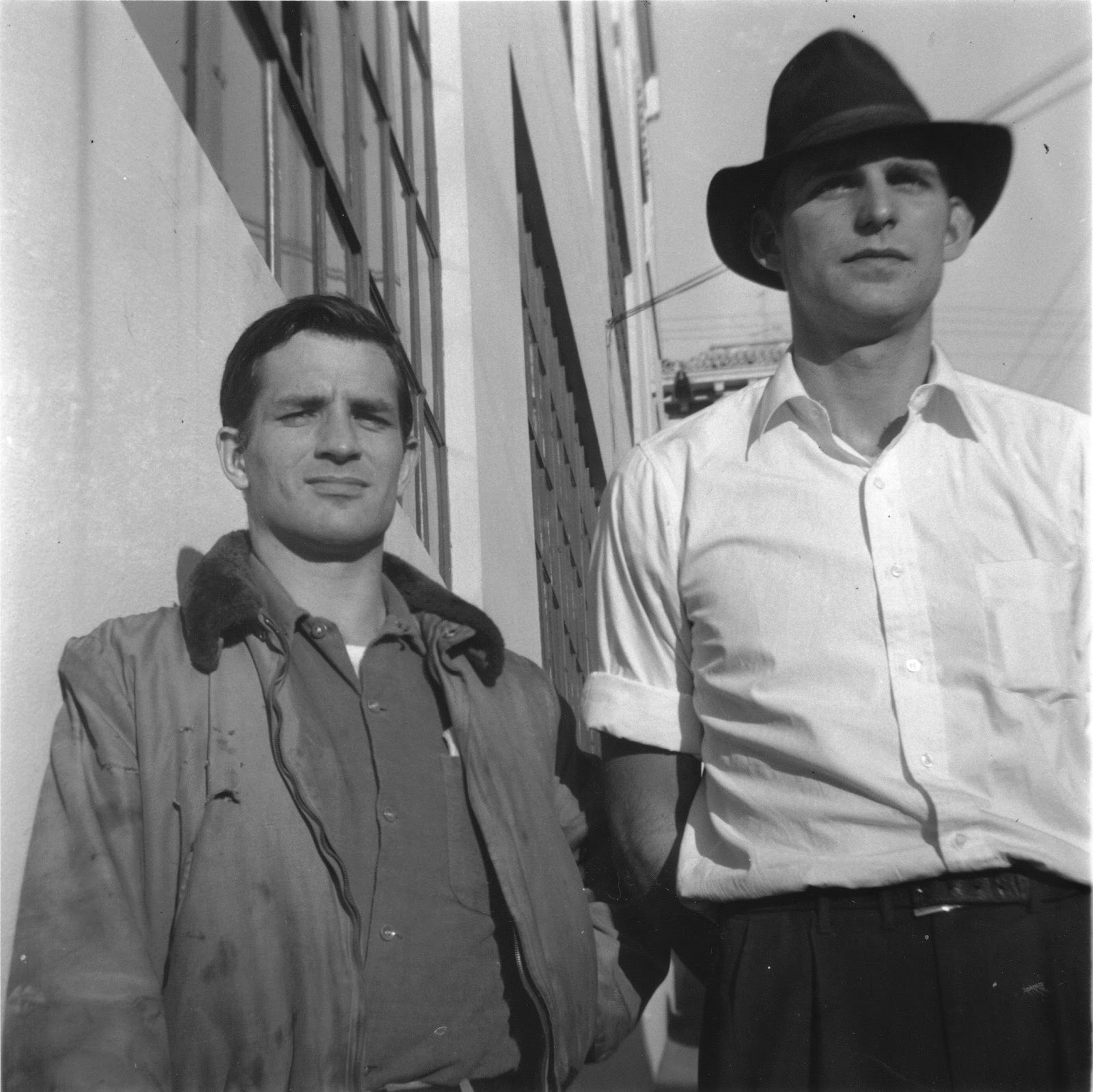
Jack Kerouac and Al Hinkle (aka Ed Dunkel’ in “On The Road’) in San Francisco 1952
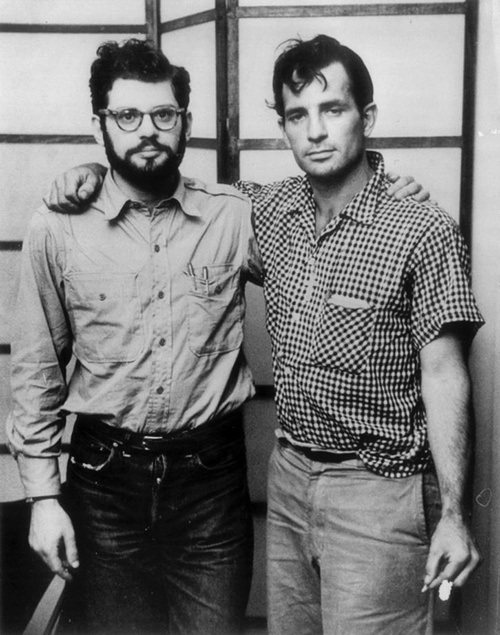
Allen Ginsberg and Jack Kerouac in San Francisco 1956.

Lawrence Ferlinghetti standing outside his cabin located by Bixby Creek in Big Sur, below the Bixby Creek Bridge on California State Route 1. In the summer of 1961, Ferlinghetti persuaded an alcoholic and troubled Jack Kerouac to take a solitary retreat to the cabin, and attempt to get his head together. Kerouac wrote the novel Big Sur about his impressions of the time he spent there.
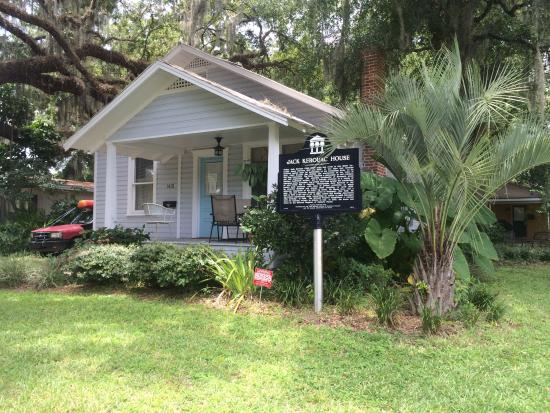
The house at 1418 Clouser Ave, Orlando, FL 32804 where Kerouac lived from 1957 to 1958. On the Road was published on September 5, 1957 while he resided here busily typing up the manuscript for The Dharma Bums.
Which leads us to his final destination, St. Petersburg, Florida.
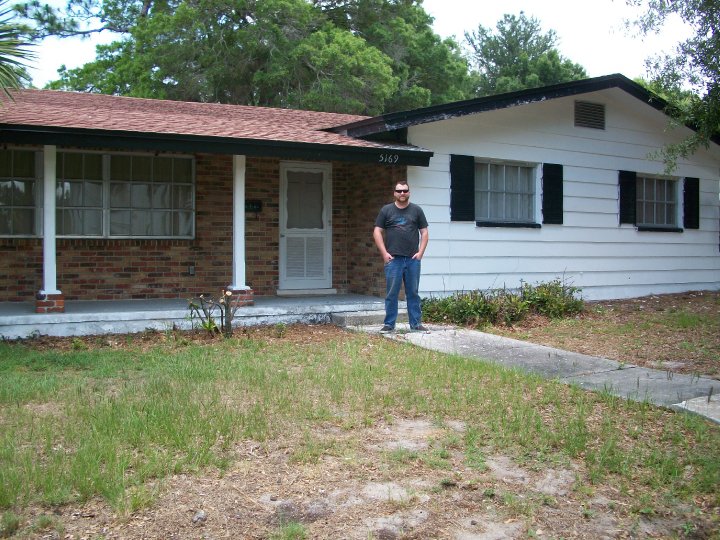
Located at 5169 10th Avenue North St. Petersburg, Florida 33710.
Kerouac was clearly on the decline as evidenced by his 1968 appearance on the William F. Buckley show.
Such a striking difference from the 1959 appearance on the Steve Allen show. This was only 10 years later.
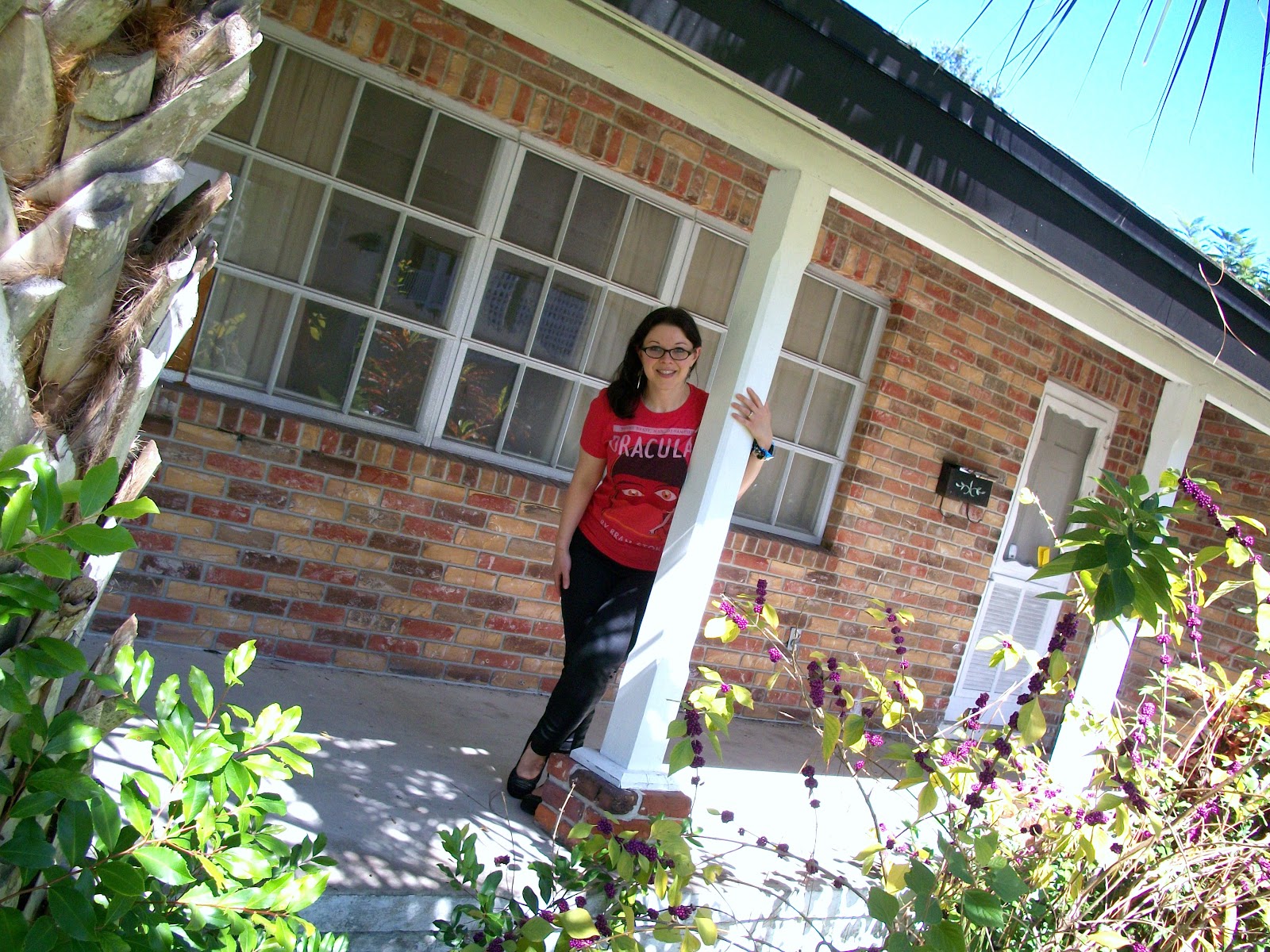
I have been to the St. Petersburg house twice. The second time was October 2015.
To get there from our home in Sarasota, we have to cross the dreaded Sunshine Skyway Bridge. Not the first one. The first one had an unfortunate (ahem) incident…
No, we had to cross the more vertiginous replacement bridge.
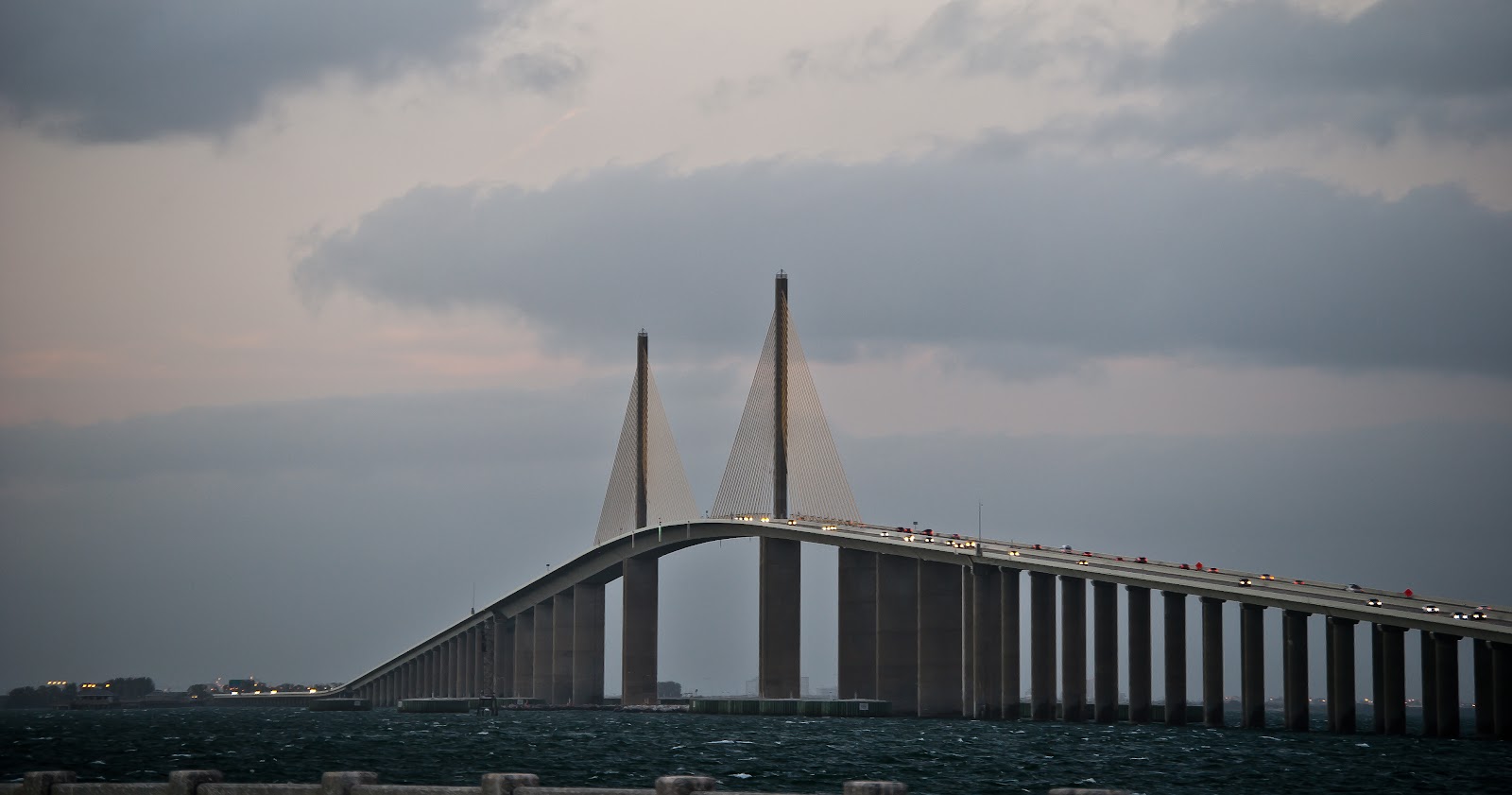
Everytime I reach the apex, I begin to hyperventilate and (possibly) pee myself a little. It doesn’t help to look down and see massive cruise ships passing underneath with plenty of room to spare.
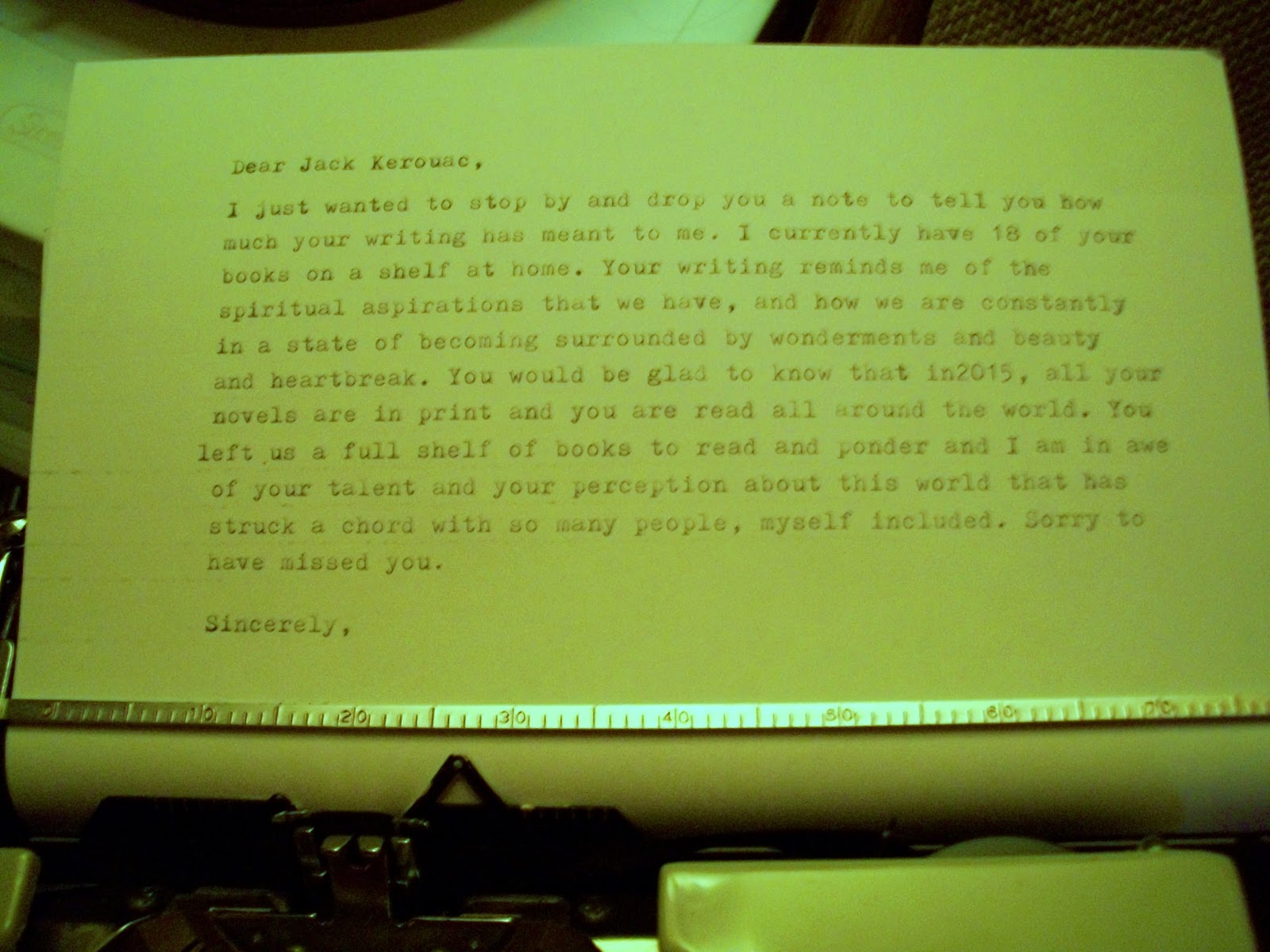
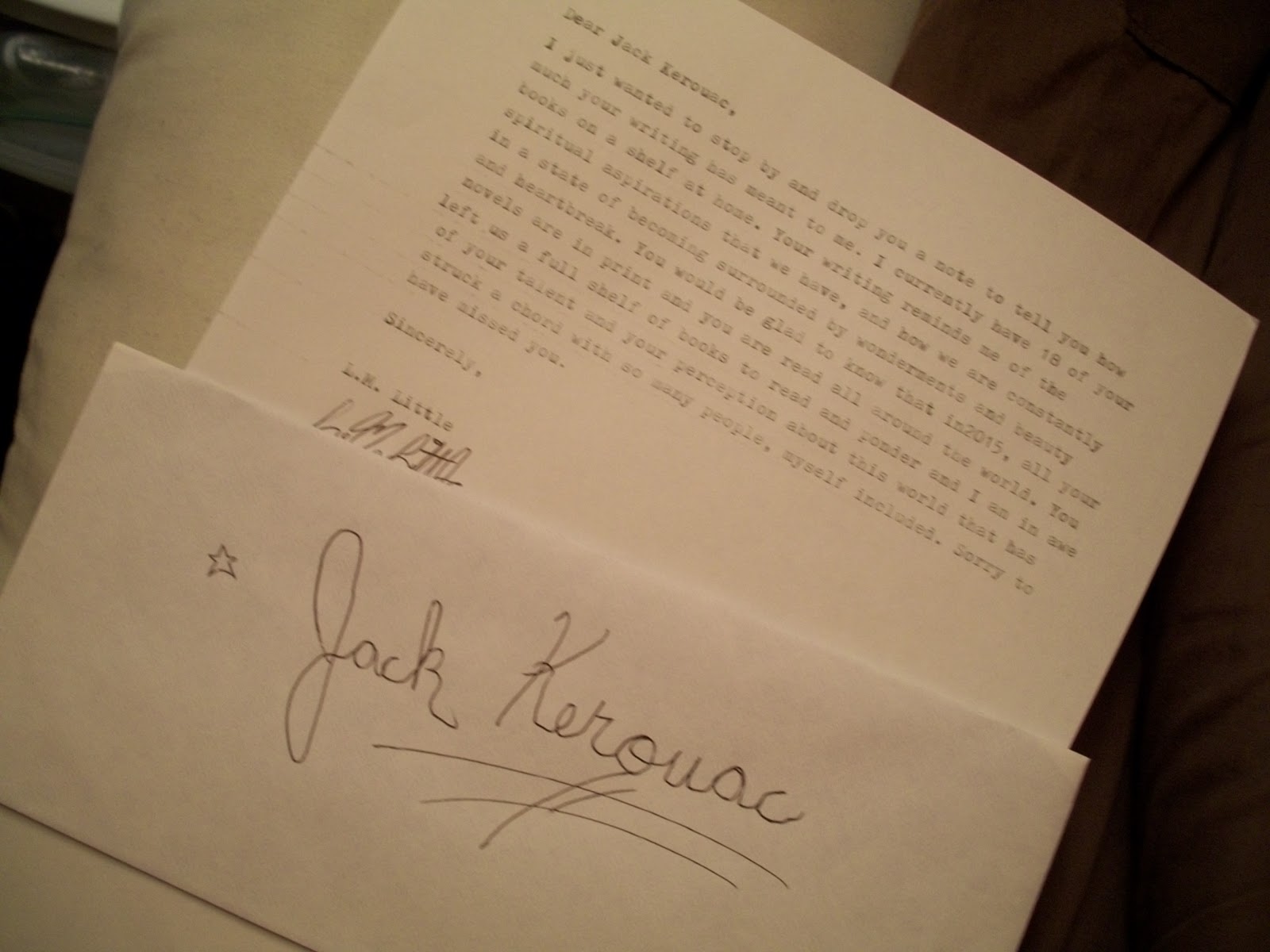
After reading an article in which others had done the same, I had decided that I wanted to type up a letter and drop it off at his last house.
I was so intrigued and desperate to see what lay inside that house. So many possibilities swirled around in my head. When I got home, I found out someone had actually gone inside. Ben Montgomery, a staff writer for the St. Petersburg Times had gained access by contacting Pat Barmore who has been trying to raise money through a non profit called The Friends of Jack Kerouac to purchase and renovate the house. The house is owned by Kerouac’s brother in law John Sampas. Sampas gave the key to Barmore after a window was broken.
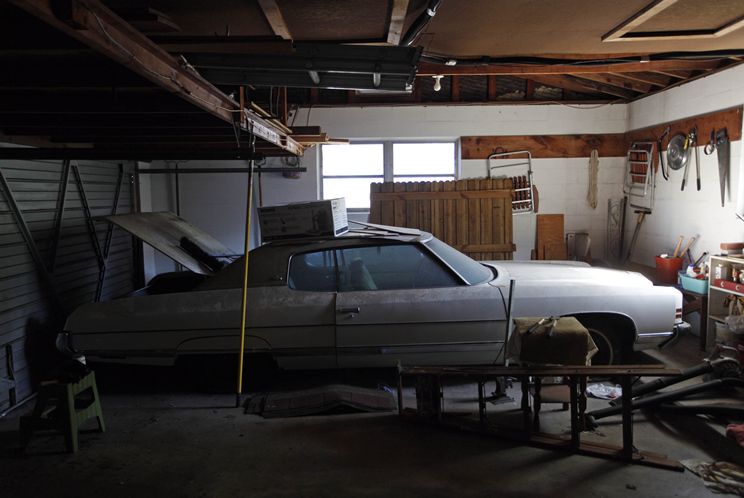
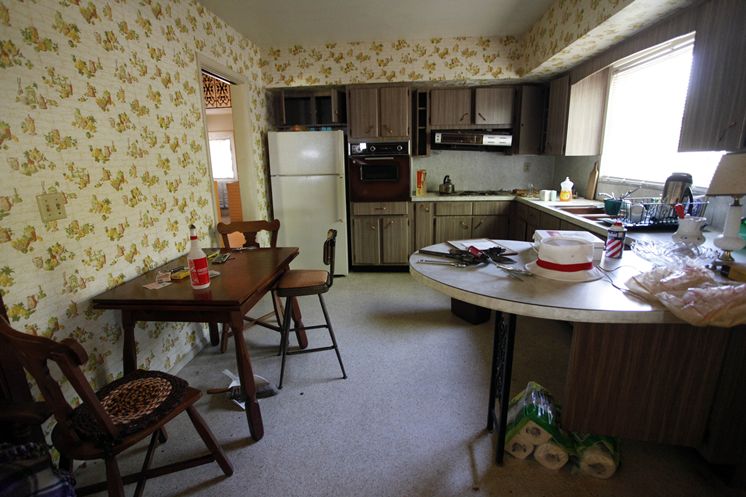
The house has been empty since the early to mid 1970’s. There is still a television antenna sticking up out of the roof.

If you look in the garage window, you can see a ‘72 Chevy Caprice up on blocks.
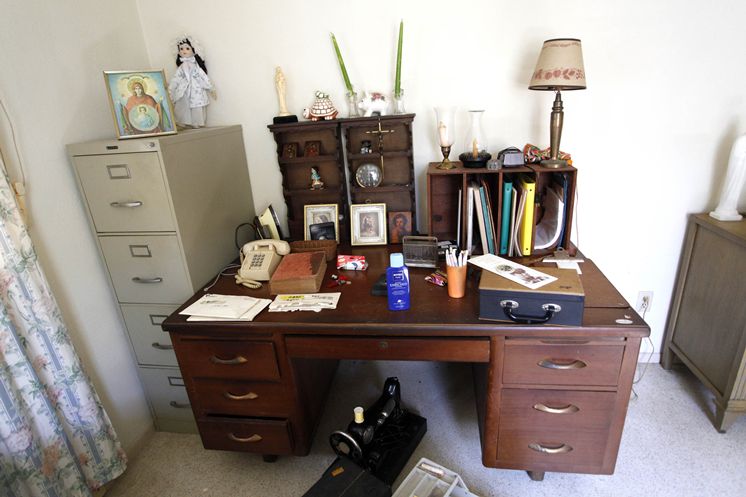
This is Jack Kerouac’s desk inside the house, and what I presume to be his typewriter on the right hand side of the photograph.
That sure looks like a type of Hat that Kerouac liked to wear as in the photograph below.
Kerouac had a few hangouts in the Tampa/St. Pete area. One was the Beaux Arts Gallery located at 7711 60th Street North Pinellas Park, Florida 33781. Jim Morrison read poetry there in 1962 while he was a student at St. Petersburg Junior College. The building unfortunately burned down in 1992.
He supposedly had his last drink at the Flamingo Sports Bar in St. Pete.
He is supposed to haunt the halls of Haslam’s bookstore
One thing that Reporter Ben Montgomery did not photograph was the bathroom. There are 3 in the house. On Monday October 20, 1969, around 11 in the morning, Kerouac was sitting in his favorite chair, drinking whiskey and malt liquor, trying to scribble notes for a book about his father's print shop in Lowell, Mass.

While eating a can of tuna fish, he suddenly felt sick to his stomach and went to the bathroom. He began to vomit up large amounts of blood. He yelled to his wife, “Stella, I’m bleeding!” At St. Anthony’s Hospital he was given transfusions amounting to 15 liters (about 15 quarts) of blood. During the evening of the 20th, he underwent a desperate 3 hour surgery to tie off the burst blood vessels, but his liver which was damaged by cirrhosis prevented his blood from clotting.
I wonder if he dreamt of his life as he lay there dying. Perhaps he thought of this incident that happened 26 years earlier.
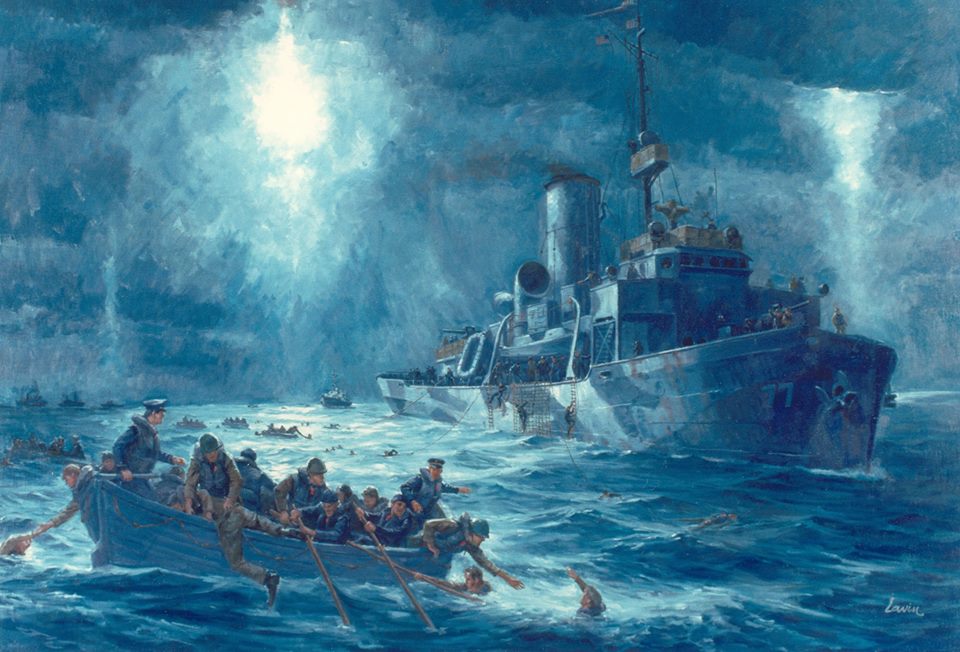
The USS Dorchester was sunk by German submarine U-223 on February 3, 1943. Jack Kerouac had previously sailed on this ship and would have been on board that night had he not received a telegram from Coach Lou Little, asking him to return to Columbia University to play football. This tragedy was also notable for the heroism of the Four Chaplains who gave up their life jackets and went down with the ship.
He did so much during those 26 years.
So much.
He died on October 21, 1969 at about 5:45 in the morning having never regained consciousness from the surgery.
It was a Tuesday.
He was 47 years old.
CBS News anchor Walter Cronkite announced on the evening news that, “Jack Kerouac, the novelist who wrote On The Road reached the end of it today.”
I would like to think that he would be pleased to know that he is still in print and being read in 2015.
One of the letters stuffed into his mailbox read, “Stopped by to say hello. Sorry to have missed you.”
For further reading see…